📚 What is a Prism?
In mathematics, a prism is a three-dimensional geometric shape with two identical ends (bases) that are flat polygons (shapes with straight sides), and the sides are parallelograms (four-sided shapes with opposite sides parallel). Think of it like stretching a polygon into a 3D shape!
📜 A Little History
People have been studying prisms for a long time! Ancient mathematicians like Euclid explored their properties. One of the most famous early uses of prisms was by scientists studying light. Sir Isaac Newton, for example, used a prism to show that white light is actually made up of all the colors of the rainbow! 🌈
🔑 Key Principles of Prisms
- 📏Bases: Prisms have two identical bases that are polygons. These bases are parallel to each other.
- ↔️Lateral Faces: The sides of a prism, called lateral faces, are always parallelograms.
- 📐Right Prism: If the lateral faces are rectangles (and perpendicular to the bases), it's called a right prism.
- ⬡Oblique Prism: If the lateral faces are parallelograms but not rectangles, it's an oblique prism.
🌈 Different Types of Prisms
Prisms are named after the shape of their bases. Here are some common types:
- 🔺Triangular Prism: Its bases are triangles. Think of a Toblerone bar!
- 🔲Rectangular Prism: Its bases are rectangles. A shoebox is a good example.
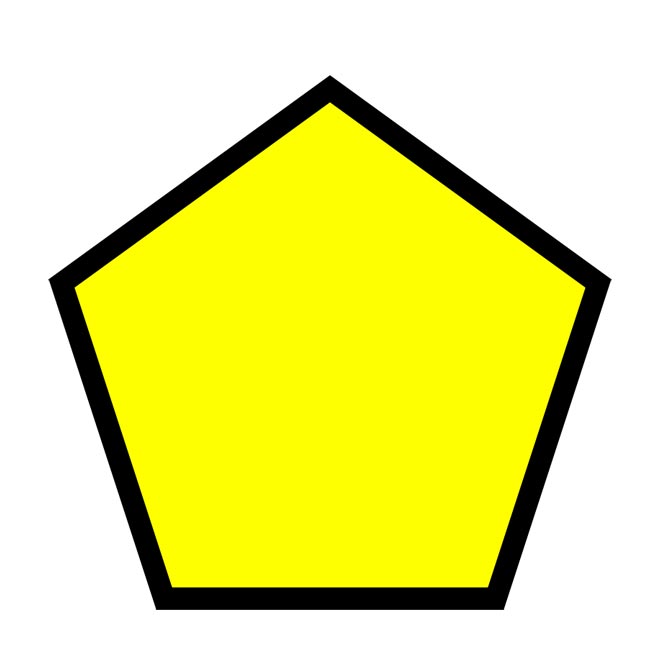 Pentagonal Prism: Its bases are pentagons (five-sided shapes).
 Hexagonal Prism: Its bases are hexagons (six-sided shapes).
🌍 Real-World Examples of Prisms
- 💎Crystals: Many crystals grow in the shape of prisms.
- 🔦Optical Prisms: These are used in telescopes and binoculars to bend and redirect light.
- 🏠Buildings: Some buildings are designed with prism-like shapes for architectural interest.
- 📦Packaging: Many boxes and packages are shaped like rectangular prisms for easy stacking.
📐 Calculating the Volume of a Prism
The volume of any prism can be found with a simple formula:
$Volume = Base Area \times Height$
Where 'Base Area' is the area of one of the bases, and 'Height' is the distance between the two bases.
💡 Conclusion
Prisms are all around us, from the candy we eat to the buildings we see! Understanding their shapes and properties helps us appreciate the world of geometry. Keep an eye out for prisms – you might be surprised how many you find! ✨