📚 What is Perfect Proportion in Art?
Perfect proportion in art refers to the harmonious relationship between different parts of a work, creating a sense of balance, beauty, and visual appeal. It often involves mathematical ratios and principles that have been studied and applied by artists for centuries.
📜 A Brief History
The concept of perfect proportion dates back to ancient civilizations. The Egyptians used grids to ensure accurate proportions in their art. The Greeks, particularly during the Classical period, developed sophisticated systems based on mathematical ratios like the Golden Ratio to achieve ideal beauty.
- 🏛️ Ancient Egypt: Egyptians utilized grids and strict proportional canons in their sculptures and paintings to maintain consistency and convey symbolic meaning.
- 🏺 Classical Greece: Greek sculptors, like Polykleitos, developed canons of proportion based on mathematical ratios, aiming for idealized human forms.
- Renaissance: The Renaissance saw a revival of interest in classical proportions, with artists like Leonardo da Vinci exploring human anatomy and mathematical relationships in their works.
📐 Key Principles of Perfect Proportion
- 📏 The Golden Ratio: The Golden Ratio, approximately 1.618, is a mathematical ratio found in nature and art. It is often used to create aesthetically pleasing compositions. The Fibonacci sequence (1, 1, 2, 3, 5, 8...) is closely related, where each number is the sum of the two preceding ones, and the ratio between consecutive numbers approaches the Golden Ratio. Mathematically, it's represented as: $ \frac{a+b}{a} = \frac{a}{b} = \phi \approx 1.618 $
- ⚖️ Symmetry: Symmetry involves balanced proportions across a central axis. Bilateral symmetry, where two halves mirror each other, is common in both natural and artistic forms.
- 🔁 Hierarchy: Emphasizing certain elements through size and placement to create a focal point and guide the viewer's eye.
- 🌱 Naturalism: Mimicking the proportions found in nature.
🎨 Real-World Examples in Art
Let's delve into some iconic artworks that exemplify perfect proportion:
-
🗿 Vitruvian Man by Leonardo da Vinci
This drawing perfectly illustrates da Vinci's exploration of human proportions based on the writings of the Roman architect Vitruvius. The figure's proportions are mathematically precise and embody the ideal human form.

-
🏛️ The Parthenon
This ancient Greek temple exemplifies the use of the Golden Ratio in architecture. Its dimensions and structural elements adhere to mathematical proportions, contributing to its harmonious and visually pleasing design.

-
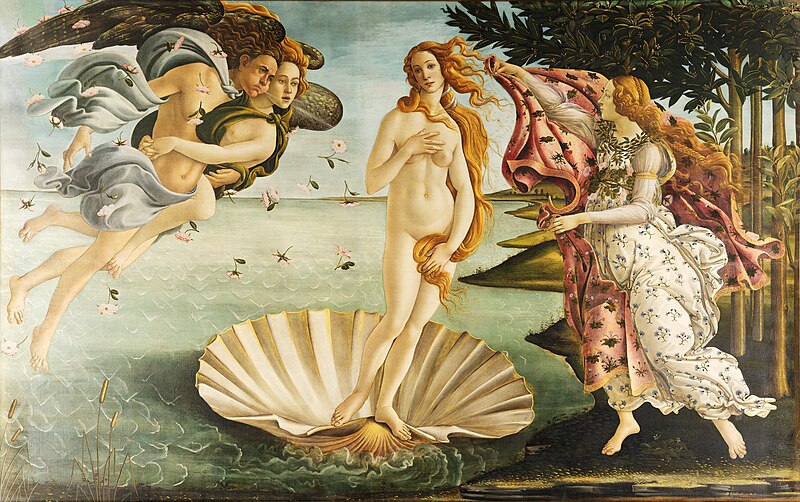
🖼️ The Birth of Venus by Sandro Botticelli
Botticelli's masterpiece showcases idealized human proportions inspired by classical art. Venus's figure embodies grace and beauty through carefully considered ratios and symmetry.
-
👤 David by Michelangelo
Michelangelo's David is a prime example of Renaissance sculpture that embodies perfect human proportion. The statue's anatomy and overall composition reflect a deep understanding of classical ideals and mathematical relationships.

💡 Conclusion
Understanding and applying perfect proportion is crucial in creating visually compelling and harmonious artworks. From ancient civilizations to the Renaissance and beyond, artists have used mathematical principles and observation to achieve balance and beauty in their creations. By studying these key works and principles, artists and art enthusiasts alike can gain a deeper appreciation for the power of proportion in art.